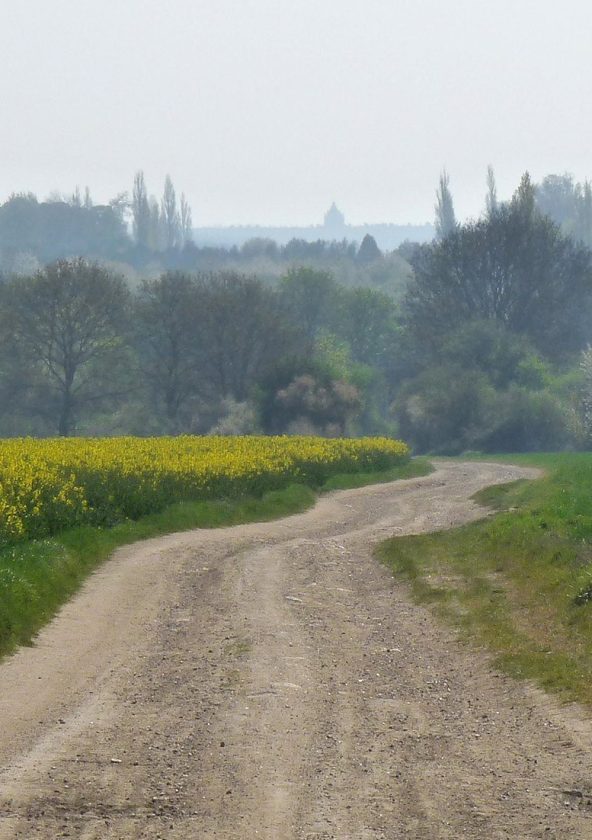
From Fontenay-le-Fleury, head for the royal avenue with its view of the Palace of Versailles.
In Haut Fontenay, history suggests the presence of a feudal motte (an artificial mound on which a wooden fortification was built, belonging to a lord), with its fortified house dating back to the 11th or 12th centuries, as well as a seigneurial residence, the Manor of the Chapelle Saint-Jean.
A stream known as Pré des Seigneurs (“Meadow of the Lords”) also bears witness to the ancient presence of local lords in the area.
To discover along the way
- Parc des Missionnaires
Formerly known as La Franchinerie, this estate was acquired by Louis XIV for Madame de Maintenon. A residence was built there in the early 18th century for the Missionaries, who were educators at the Royal House of Saint-Cyr. The château was demolished in 1976 for safety reasons. The park was redesigned after the 1999 storm, which destroyed part of its collection of century-old trees.
- Chapelle Saint-Jean
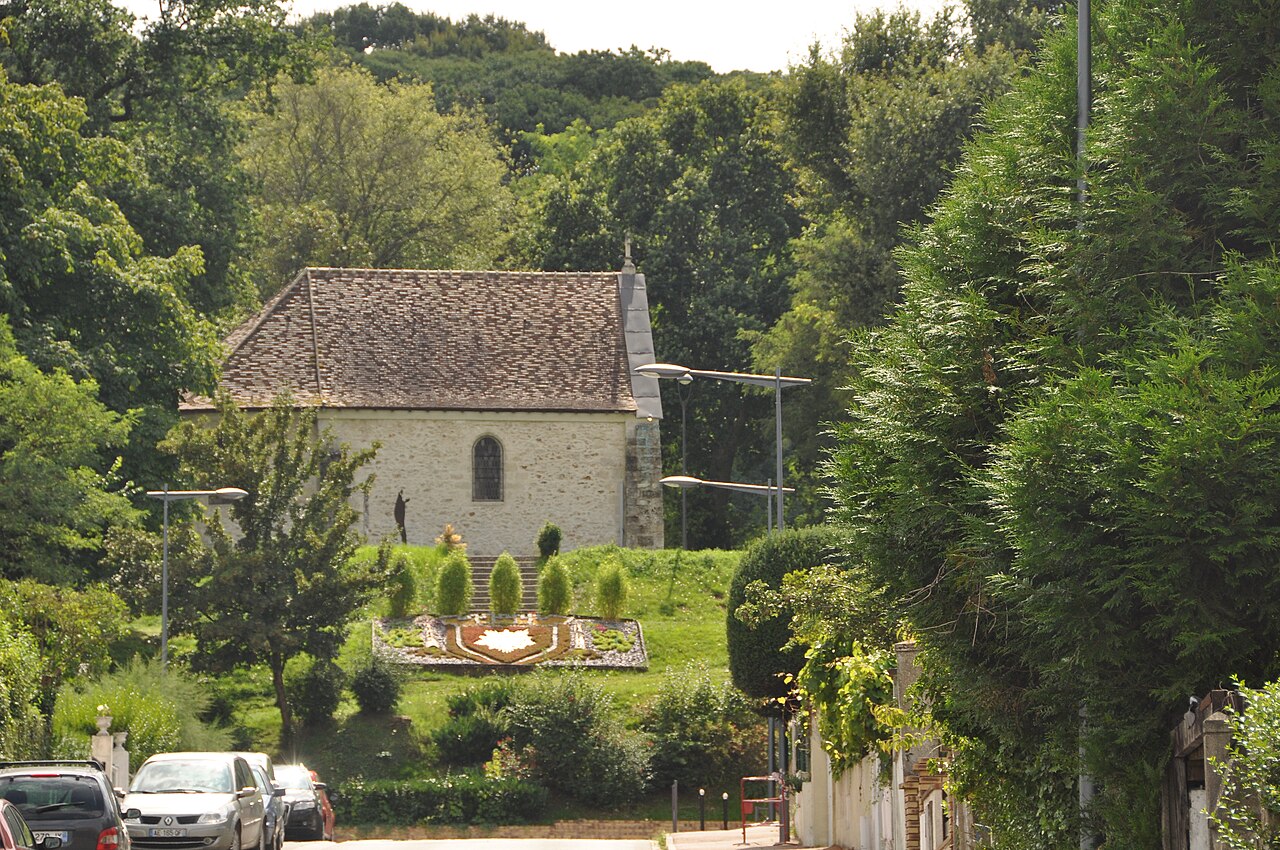
Built in the Gothic style with touches of Romanesque art, the Chapelle Saint-Jean was extended with an apse in 1857 and restored in 1964. After damage caused by the 1999 storm, further renovation was carried out in 2006. Today, the chapel has regained its original architectural features and hosts cultural events.
- Château de Ternay
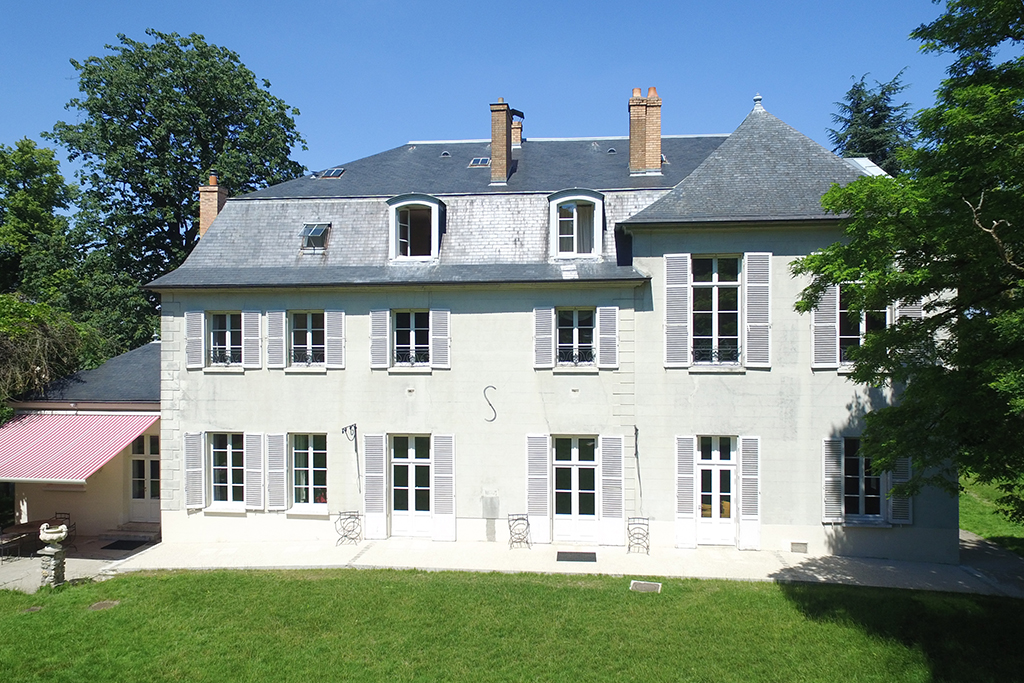
Mentioned as early as 1482 in the registers of the Villepreux notary office, the Château de Ternay was remodelled in the 19th century in the Directoire style. Sacha Guitry lived there between 1937 and 1957. The château was later acquired by the Le Vicomte family and is now a private property.
- Chemin du Pont des Roches
This path takes its name from the former Roche family, one of whose members, Jeuffroy de La Roche, served as Governor of the King’s Menagerie and Commander of the Royal Park gamekeepers in 1686.
- Aqueduct of the Avre
Built in 1893, the aqueduct connects Verneuil-sur-Avre (Eure) to Paris, crossing the Plaine de Versailles. It supplies Paris with drinking water. The structure consists of an underground masonry gallery, whose route can still be traced in the landscape by the green corridor located above it.
- The Royal Avenue of Villepreux (from Versailles to Villepreux)
This was the main axis of five avenues radiating from the Étoile Royale, forming a majestic landscape ensemble once compared to “the King’s hand resting on his territory.” Extending the Grand Canal, the Royal Avenue of Villepreux links the Château of Versailles to the town of Villepreux through the King’s former hunting grounds. Designed by André Le Nôtre, landscape architect of the Palace gardens, the avenue was conceived as a clear, uninterrupted axis visible from the Hall of Mirrors and stretching toward the horizon, enhancing the geometric perfection of the gardens. Approximately 5 km long, it was a grassy avenue bordered by two main paths (5 metres wide) lined with double rows of elm trees, with outer side paths measuring 3 metres.
- Municipal Forest of Villepreux
A stream known as Pré des Seigneurs (“Meadow of the Lords”) also bears witness to the ancient presence of local lords in the area.
To discover along the way
- Parc des Missionnaires
Formerly known as La Franchinerie, this estate was acquired by Louis XIV for Madame de Maintenon. A residence was built there in the early 18th century for the Missionaries, who were educators at the Royal House of Saint-Cyr. The château was demolished in 1976 for safety reasons. The park was redesigned after the 1999 storm, which destroyed part of its collection of century-old trees.
- Chapelle Saint-Jean
Built in the Gothic style with touches of Romanesque art, the Chapelle Saint-Jean was extended with an apse in 1857 and restored in 1964. After damage caused by the 1999 storm, further renovation was carried out in 2006. Today, the chapel has regained its original architectural features and hosts cultural events.
- Château de Ternay
Mentioned as early as 1482 in the registers of the Villepreux notary office, the Château de Ternay was remodelled in the 19th century in the Directoire style. Sacha Guitry lived there between 1937 and 1957. The château was later acquired by the Le Vicomte family and is now a private property.
- Chemin du Pont des Roches
This path takes its name from the former Roche family, one of whose members, Jeuffroy de La Roche, served as Governor of the King’s Menagerie and Commander of the Royal Park gamekeepers in 1686.
- Aqueduct of the Avre
Built in 1893, the aqueduct connects Verneuil-sur-Avre (Eure) to Paris, crossing the Plaine de Versailles. It supplies Paris with drinking water. The structure consists of an underground masonry gallery, whose route can still be traced in the landscape by the green corridor located above it.
- The Royal Avenue of Villepreux (from Versailles to Villepreux)
This was the main axis of five avenues radiating from the Étoile Royale, forming a majestic landscape ensemble once compared to “the King’s hand resting on his territory.” Extending the Grand Canal, the Royal Avenue of Villepreux links the Château of Versailles to the town of Villepreux through the King’s former hunting grounds. Designed by André Le Nôtre, landscape architect of the Palace gardens, the avenue was conceived as a clear, uninterrupted axis visible from the Hall of Mirrors and stretching toward the horizon, enhancing the geometric perfection of the gardens. Approximately 5 km long, it was a grassy avenue bordered by two main paths (5 metres wide) lined with double rows of elm trees, with outer side paths measuring 3 metres.
- Municipal Forest of Villepreux