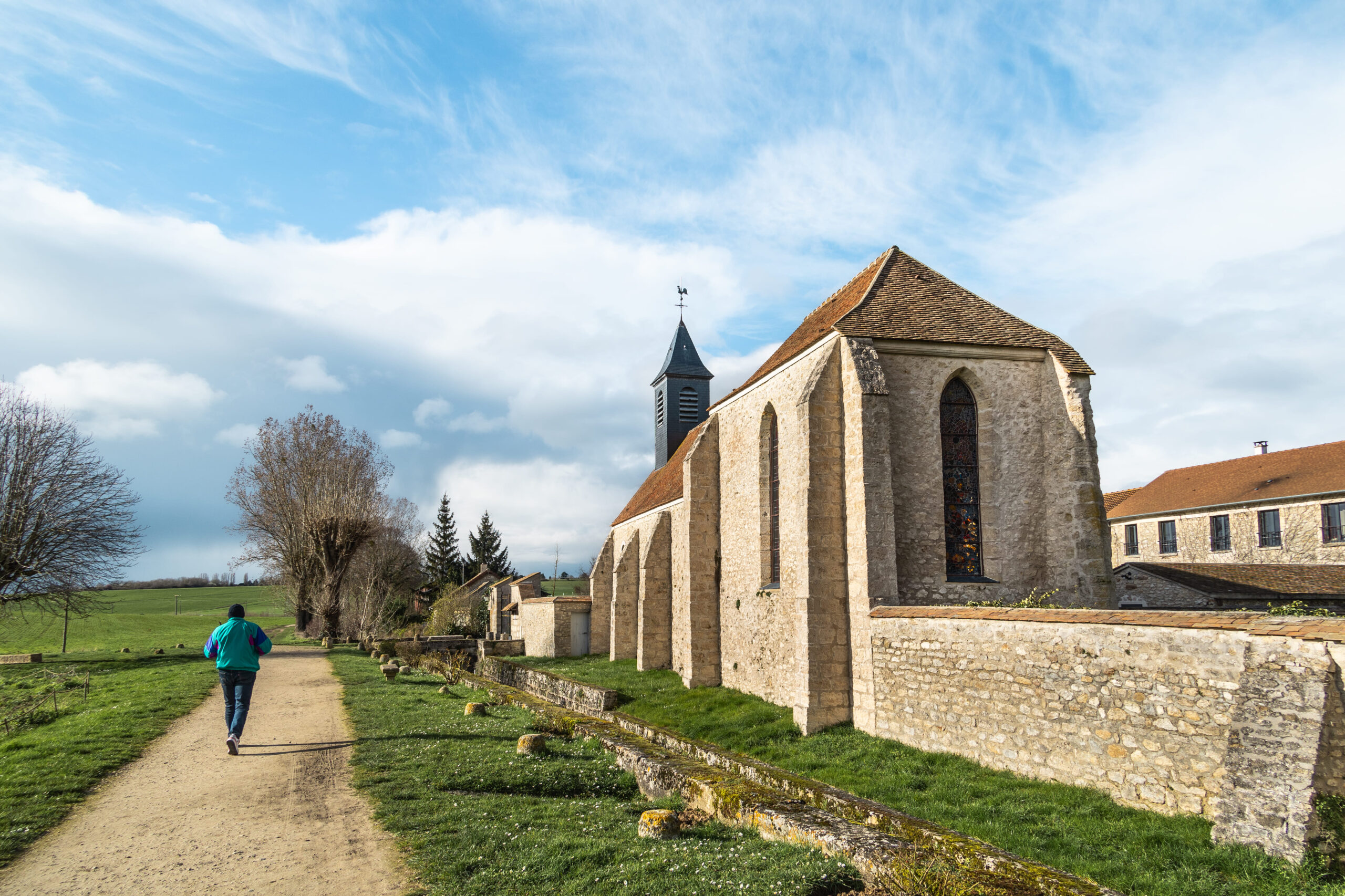
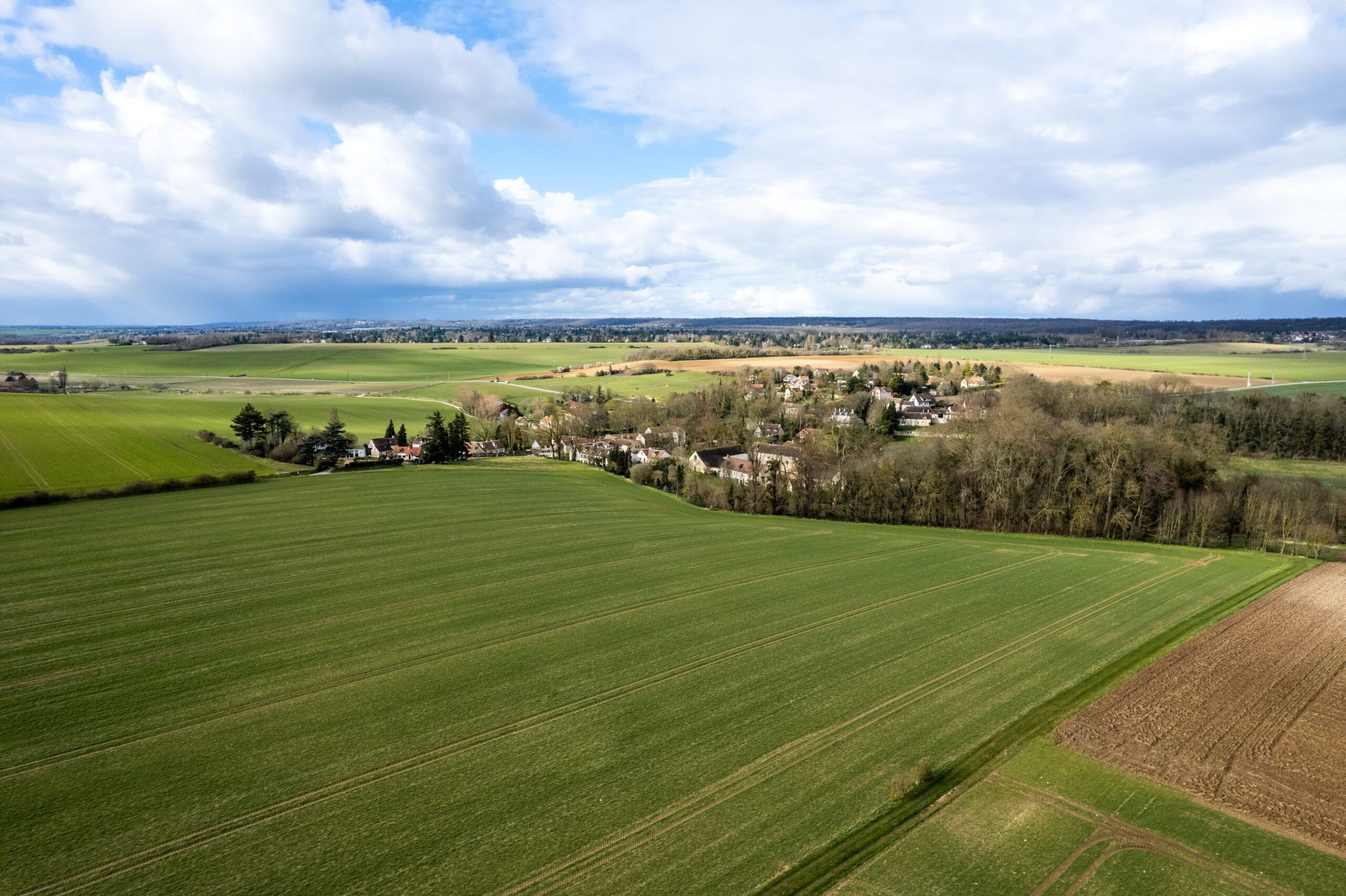
From the remains of the Château des Gondi in Noisy-le-Roi to the Gally Valley, discover the scenic and heritage treasures of the Plaine de Versailles.
In 1568, Albert de Gondi acquired the Seigneury of Noisy. At the time, he was Grand Chamberlain and Marshal of France, and a close advisor to King Charles IX. He had a château built in Noisy. The seigneury remained in the Gondi family until the mid-17th century.
The Gondi Gate is a gateway from the former Château de Noisy-le-Roi (also known as the Château des Gondi), dating from the second half of the 16th century and built by Albert de Gondi. Although the château has now completely disappeared, the gate remains the last surviving witness of its former splendour. The Gondi Gate is listed as a Historic Monument, and an interpretation trail allows visitors to discover the history of the site.
To discover along the way
- Saint-Nicolas Washhouse (Rennemoulin): One of the few washhouses in the region built as an atrium, it houses an oratory dedicated to Saint Nicholas, patron saint of Rennemoulin until the French Revolution.
- Former Royal Farm of Moulineaux and Pontaly Farm: The origins of these farms date back to the 12th and 13th centuries, linked to the installation of water mills at the confluence of the Gally and Maltoute streams—the name Moulineaux likely referring to these mills. Their architecture reflects the local rural identity and stands out in the wide-open landscapes of the Plaine de Versailles, bearing witness to the management of the Grand Hunting Park and rural life of the time.
- Château de la Pépinière – Bailly Town Hall: This bourgeois residence, or “château,” was built in 1850 by Charles Soulange Renard, a Parisian banker, on the site of a former 15-hectare nursery.
- Château de Bailly: Begun around 1526 by Catherine de Saint-Benoist for Jehan de Saint-Benoît, it was completed in 1538 by her son-in-law Jacques des Ligneris and sold in 1571 to Albert de Gondi. Successive owners made various additions, including a terrace (early 18th century) and façade renovations (late 18th to early 19th century). Today, the château belongs to the Stern Foundation.
- Saint-Sulpice Church (Bailly): A parish and royal church under Louis XV, combining Gothic architecture (13th century) and Classical elements (the date 1610 is carved into the wood of the main door). It contains several listed works of art.
- Porte de Bailly: Originally known as the Porte de Noisy, opening onto the Chemin des Princes, it allowed Louis XIV’s grandsons to reach the Château de Noisy, where the kennels were located, before hunting in the forests of Marly or Saint-Germain. The Porte de Bailly is one of the exits from the Petit Parc. The path leading to the Park of Versailles begins at the northern end of the Grand Canal, on the Trianon side, allowing pedestrians to reach central Versailles from Bailly in about 50 minutes.
The Gondi Gate is a gateway from the former Château de Noisy-le-Roi (also known as the Château des Gondi), dating from the second half of the 16th century and built by Albert de Gondi. Although the château has now completely disappeared, the gate remains the last surviving witness of its former splendour. The Gondi Gate is listed as a Historic Monument, and an interpretation trail allows visitors to discover the history of the site.
To discover along the way
- Saint-Nicolas Washhouse (Rennemoulin): One of the few washhouses in the region built as an atrium, it houses an oratory dedicated to Saint Nicholas, patron saint of Rennemoulin until the French Revolution.
- Former Royal Farm of Moulineaux and Pontaly Farm: The origins of these farms date back to the 12th and 13th centuries, linked to the installation of water mills at the confluence of the Gally and Maltoute streams—the name Moulineaux likely referring to these mills. Their architecture reflects the local rural identity and stands out in the wide-open landscapes of the Plaine de Versailles, bearing witness to the management of the Grand Hunting Park and rural life of the time.
- Château de la Pépinière – Bailly Town Hall: This bourgeois residence, or “château,” was built in 1850 by Charles Soulange Renard, a Parisian banker, on the site of a former 15-hectare nursery.
- Château de Bailly: Begun around 1526 by Catherine de Saint-Benoist for Jehan de Saint-Benoît, it was completed in 1538 by her son-in-law Jacques des Ligneris and sold in 1571 to Albert de Gondi. Successive owners made various additions, including a terrace (early 18th century) and façade renovations (late 18th to early 19th century). Today, the château belongs to the Stern Foundation.
- Saint-Sulpice Church (Bailly): A parish and royal church under Louis XV, combining Gothic architecture (13th century) and Classical elements (the date 1610 is carved into the wood of the main door). It contains several listed works of art.
- Porte de Bailly: Originally known as the Porte de Noisy, opening onto the Chemin des Princes, it allowed Louis XIV’s grandsons to reach the Château de Noisy, where the kennels were located, before hunting in the forests of Marly or Saint-Germain. The Porte de Bailly is one of the exits from the Petit Parc. The path leading to the Park of Versailles begins at the northern end of the Grand Canal, on the Trianon side, allowing pedestrians to reach central Versailles from Bailly in about 50 minutes.